Ready for C1 p 84. Science and Technology. Monologue. Sample Answer. Word Formation

Questions:

1. Advantages and disadvantages of social media. 

2. Advantages and disadvantages of AI.

3. How has technology changed teaching and learning?


Sample answer: 


Have you ever wondered how different our lives would be without social media, AI, or modern technology in education? Today, I’m going to delve into these three pivotal issues. Firstly, I'll explore the benefits and drawbacks of social media. Then, I'll move on to the pros and cons of Artificial Intelligence (AI). Finally, I will discuss how technology has transformed teaching and learning.

First of all, I'd like to start by giving my opinion on the impact of social media, (1)__________(SPECIFIC) its upsides and downsides. Social media has (2)_____________(REVOLUTION) the way we communicate and share information. On one hand, it offers (3)____________(NUMBER) opportunities. For instance, it allows us to connect with friends and family across the globe, share experiences in real time, and access a vast amount of information. Social media platforms are also (4)___________(POWER) tools for raising awareness about important issues and (5)____________(MOBILE) communities. In fact, they have been a (6)_________________(GAME) in how movements and causes gain (7)___________(TRACTOR).

However, there are also significant challenges to consider. One major (8)___________(WEAK) is the impact on mental health. Studies have shown that (9)____________(EXCESS) use of social media can lead to feelings of anxiety, depression, and (10)______________(LONELY). (11)___________(ADD), many people live in a social media bubble, or even an echo chamber, where they are only exposed to information that reinforces their existing beliefs. (12)______________(FAR) the spread of (13)____________(INFORM) and fake news is a serious concern, as it can bring about public (14)_____________(UNDERSTAND) and panic. (15)_____________(PRIVATE) issues are another critical pitfall, as personal data can be easily exploited by third parties. (16)_____________(BULL) and (17)______________(TROLL) are also rampant, causing (18)______________(EMOTION) distress to many users.

Moving on to the next point, let’s now discuss the merits and demerits of Artificial Intelligence (AI). AI has the potential to (19)_____________(SIGNIFY) enhance our daily lives and various industries. For example, AI can perform tasks more efficiently and accurately than humans, such as analysing large datasets, which is incredibly useful in fields like healthcare and finance. This (20)______________(EDGE) technology can also (21)______________(AUTOMATIC) repetitive tasks, allowing people to focus on more creative and strategic work. AI-powered personal assistants and (22)_____________(STATE) technology like self-driving cars are becoming more (23)_____________(FRIEND) and accessible, changing the way we live and work.

On the flip side, there are notable disadvantages. One of the main concerns is job (24)_______________(PLACE). As AI continues to advance, it is likely to replace many jobs, particularly those involving routine tasks. This could result in significant (25)____________(EMPLOY) and (26)_____________(ECONOMY) disruption. Moreover, there are ethical considerations, including the potential for bias in AI algorithms and the lack of (27)__________________(TRANSPARENT) in decision-making processes. (28)______________(SURE) that AI systems are fair and (29)______________(COUNT) is a major challenge. The unchecked development of AI might lead us down a (30)___________(SLIP) slope or be seen as the thin end of the wedge in terms of privacy and control.

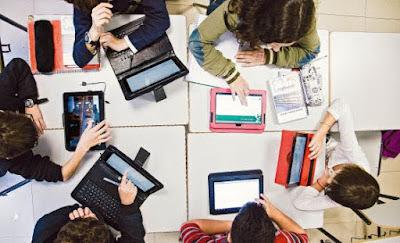
Finally, let’s turn to how technology has changed teaching and learning. In the past decade, recent technological advances have had a profound impact on education. First of all, it has made learning more (31)_______________(ACCESS). Online platforms and digital resources mean that students can learn from anywhere in the world, often at their own pace. This has been especially beneficial during the COVID-19 pandemic, where traditional classroom learning was disrupted. M-learning, or mobile learning, allows students to access educational materials on their smartphones and tablets. Besides, technology has enhanced the interactivity and (32)______________(ENGAGE) of learning. Tools like interactive simulations, educational games, and virtual reality can make learning more dynamic and (33)_______________(ENJOY). (34)____________(GAME) and (35)_____________(WEAR) technology are examples of how tech can make learning experiences more engaging. On top of that, technology allows for (36)______________(PERSON) learning experiences, where educational content can be tailored to meet the individual needs of each student. The (37)_______________(FLIP) classroom model, where students review materials at home and do practical work in class, is a perfect example of how technology can innovate traditional teaching methods.

However, there are also disadvantages. One of the main challenges is the digital divide, where not all students have equal access to technology and the internet, which can exacerbate educational (38)_______________(EQUAL). Moreover, the (39)_____________(RELY) on technology can sometimes detract from traditional teaching methods that are still valuable, in particular face-to-face interaction and hands-on learning. (40)____________(SAVVY) students might adapt quickly, but those who are less familiar with technology might struggle to keep up, creating an (41)_____________(BALANCE) in learning.

In conclusion, while social media, AI, and technology in education all offer (42)____________(SUBSTANCE) benefits, they also come with significant challenges that must be carefully managed. By recognising and addressing these issues, we can make the most of these technologies to improve our lives and society. This (43)______________(THINK) topic certainly gives us food for thought as we continue to navigate the digital age.


KEY


1. specifically


2.  revolutionised


3. numerous


4. powerful


5. mobilising


6. game-changer


7. traction

traction: the extent to which an idea, a product, etc. becomes popular or gains support. Sp. ganar terreno.

E.g.The president's message is gaining traction among undecided voters.


8. weakness


9. excessive


10. loneliness


11. Additionally


12. Furthermore,


13. misinformation


14. misunderstanding/-s (U, C)


15. Privacy


16. Cyberbullying


17. trolling


18. emotional


19. significantly


20. cutting-edge


21. automate


22. state-of-the-art
state-of-the-art: using the most modern or advanced techniques or methods; as good as it can be at the present time. Sp. última generación.
E.g. The system was state of the art. a state-of-the-art system.


23. user-friendly


24. displacement


25. unemployment


26. economic


27. transparency


28. Ensuring


29. accountable


30. slippery

the/a slippery slope      ​a course of action that is difficult to stop once it has begun, and can lead to serious problems or disaster. Sp. terreno resbaladizo.

E.g.

She realized he was on the slippery slope towards a life of crime.


the thin end of the wedge      ​(especially British English) an event or action that is the beginning of something more serious and/or unpleasant. Sp. el principio de algo peor.

E.g.

The introduction of a tax on workplace parking is seen by many as the thin end of the wedge.


31. accessible


32. engagement


33. enjoyable


34. Gamification


35. wearable
Wearable Technology:  
clothing and accessories incorporating computer and advanced electronic technologies.
E.g. Wearable Technologies like Google Glass and Smartwatches are on the rise in personal and business use.


36. personalised


37. flipped
Flipped classroom


In a flipped classroom model, students watch online lectures, collaborate in online discussions, or carry out research at home and engage in concepts in the classroom with the guidance of the instructor. Flipped Learning is a  pedagogical approach in  which direct instruction moves  from the group  learning space  to the individual learning  space, and the resulting  group space is transformed  into a dynamic, interactive  learning environment where  the educator guides students  as they apply concepts and  engage creatively in the  subject  matter. In a flipped classroom students are doing the lower levels of cognitive work (gaining knowledge and comprehension) outside of class, and focusing on the higher forms of cognitive work (application, analysis, synthesis, and evaluation) in class, where they have the support of their peers and instructor. This model contrasts from the traditional model in which “first exposure” occurs via lecture in class, with students assimilating knowledge through homework; thus the term “flipped classroom.” 
E.g. In a flipped classroom problems may arise if students come unprepared.     


38. inequalities   


39. over-reliance
over-reliance: excessive dependence on or trust in someone or something.
"an over-reliance on technology"

detract from: detract from something | detract something from something ​ (not used in the progressive tenses) to make something seem less good or fun SYNONYM take away from Sp. quitar mérito/valor a.
E.g. 
He was determined not to let anything detract from his enjoyment of the trip.


40. Tech-savvy 
tech-savvy: well informed about or proficient in the use of modern technology, especially computers. E.g. today’s tech-savvy consumers. Kids are pretty tech-savvy these days.


41. imbalance. Sp. desequilibrio.


42. substantial


43. thought-provoking

Speaking Questions About Different Topics

 TOPIC 1: WORK                                                                Preparation time: 5 minutes


PART 1. CONVERSATION


Talk to each other about some or all of the following. (8 minutes approx.)


  1. Advantages and disadvantages of working from home.

  2. Work-life balance. How to improve it. 

  3. Work experience. How important is it?

  4. Equal work deserves equal pay.


PART 2. MONOLOGUE


Talk about at least two of the following ideas. (4 minutes approx.) The examiner may ask you further questions about the topic.


CANDIDATE A


  1. Do schools and universities prepare students for the world of work?

  2. Are we slaves of our jobs? 

  3. How do you recharge your batteries?


CANDIDATE B


  1. ‘Burnout’ at work? What might lead to this situation and how to prevent it?

  2. How Important is ‘job satisfaction’ in today's workplace?

  3. What dream jobs would fulfil your wildest expectations?


TOPIC 2: RELATIONSHIPS                                                    Preparation time: 5 minutes


PART 1. CONVERSATION


Talk to each other about some or all of the following. (8 minutes approx.)


  1. What are the benefits of online dating? Are there any risks?

  2. How have families changed in recent years? What will families be like in the future?

  3. How can you build good rapport with your colleagues?

  4. Can social networking sites be harmful to teenagers?  


PART 2. MONOLOGUE


Talk about at least two of the following ideas. (4 minutes approx.) The examiner may ask you further questions about the topic.


CANDIDATE A


  1. How to handle difficult family members or colleagues.

  2. Why do friends drift apart at times? 

  3. What kind of problems can put a great strain on a relationship?


CANDIDATE B


  1. How to strengthen a parent-child relationship.

  2. The importance of looking after our elders. 

  3. What are the characteristics of a person who seems to get along well with everyone?


TOPIC 3: THE ENVIRONMENT                                        Preparation time: 5 minutes


PART 1. CONVERSATION


Talk to each other about some or all of the following. (8 minutes approx.)


  1. Global warming: a fact or a myth?

  2. What changes can we make to improve the environment?

  3. How to teach children to take care of the environment?

  4. Pros and cons of banning cars in city centres.  


PART 2. MONOLOGUE


Talk about at least two of the following ideas. (4 minutes approx.) The examiner may ask you further questions about the topic.


CANDIDATE A


  1. Should companies shoulder more of the cost in combating climate change?

  2. Can technology help address climate change? 

  3. Could governments do more to tackle the problem of climate change?


CANDIDATE B


  1. How do you think the world will look in a hundred years? What environmental damage can you think of?

  2. What do you try to do: reduce, reuse, recycle, or refuse? How proactive are you in protecting the environment? 

  3. What measures aim to reduce the impact of fossil fuels burning in our cities? What could be better regulated or even banned?


TOPIC 4: HEALTH                                                                    Preparation time: 5 minutes

PART 1. CONVERSATION


Talk to each other about some or all of the following. (8 minutes approx.)


  1. What do you think about our health care system? 

  2. How can we help teens to develop healthy eating habits?

  3. What are the negative effects of not living a healthy lifestyle?

  4. Traditional versus alternative medicine. Which one do you prefer? Why?


PART 2. MONOLOGUE


Talk about at least two of the following ideas. (4 minutes approx.) The examiner may ask you further questions about the topic.


CANDIDATE A


  1. Health benefits of regular physical activity.

  2. Ways to cope with work stress and avoid burnout

  3. What do you think about new diet trends? Are they all healthy?


CANDIDATE B


  1. Health benefits of social interaction .

  2. What advice do you hear about getting and staying healthy?

  3. What do you think are the benefits or potential dangers of online medical advice? Would you consult a medical service on the Internet?


TOPIC 5: SCIENCE AND TECHNOLOGY                                Preparation time: 5 minutes

PART 1. CONVERSATION


Talk to each other about some or all of the following. (8 minutes approx.)


  1. How has technology changed teaching and learning ? 

  2. Is phubbing bad for our relationships?

  3. Advantages and disadvantages of social media?

  4. What will technology be like in the next 10 years?


PART 2. MONOLOGUE


Talk about at least two of the following ideas. (4 minutes approx.) The examiner may ask you further questions about the topic.


CANDIDATE A


  1. Positive and negative effects of technology on people’s health.

  2. At what age should children be allowed to have their first smartphones? Why?

  3. What major technological breakthroughs do you think have had the greatest impact on society?


CANDIDATE B


  1. In what ways has technology improved our lives? In what ways has it made life worse?

  2. What are the pros and cons of AI?

  3. What are the benefits and drawbacks of working from home via a computer?


TOPIC 6: CRIME AND PUNISHMENT                                       Preparation time: 5 minutes

PART 1. CONVERSATION


Talk to each other about some or all of the following. (8 minutes approx.)


  1. Do you think there should be more surveillance cameras? Or are there too many already?

  2. Should the purpose of prison be punishment or rehabilitation?

  3. How could we end corruption?

  4. How to prevent cybercrime.


PART 2. MONOLOGUE


Talk about at least two of the following ideas. (4 minutes approx.) The examiner may ask you further questions about the topic.


CANDIDATE A


  1. Is prison an effective deterrent against crime? Why / why not?

  2. How damaging is digital piracy?

  3. Does Spain have a problem with squatters?


CANDIDATE B


  1. What crimes bother you most and why.

  2. Are you in favour of a zero tolerance policy for drink-driving? What about using a phone while driving?

  3. Do you think there are criminals who instead of doing time should do some kind of community service? 


TOPIC 7: HOLIDAYS AND TRAVEL                                         Preparation time: 5 minutes

PART 1. CONVERSATION


Talk to each other about some or all of the following. (8 minutes approx.)

  1. How can travel broaden our mind?

  2. ‘When in Rome, do as the Romans do.’ Discuss. 

  3. What impact does tourism have on an area?

  4. The future of travel and tourism.


PART 2. MONOLOGUE


Talk about at least two of the following ideas. (4 minutes approx.) The examiner may ask you further questions about the topic.


CANDIDATE A


  1. Advantages and disadvantages of travelling solo.

  2. What is the best travel advice you have ever received?

  3. What is the positive and negative impact of having free public transport?


CANDIDATE B


  1. Advantages and disadvantages of travelling with a group.

  2. Do you feel that your physical and psychological well-being improves when you go away on holiday? In what ways?

  3. What is the best age to travel? Why?


TOPIC 8: LANGUAGES                                                             Preparation time: 5 minutes

PART 1. CONVERSATION


Talk to each other about some or all of the following. (8 minutes approx.)

  1. What are the benefits of learning a foreign language?

  2. What is the best way to learn a language? 

  3. Is it important to keep minority languages alive? Why? How can we preserve them?

  4. Benefits and drawbacks of having a universal language.


PART 2. MONOLOGUE


Talk about at least two of the following ideas. (4 minutes approx.) The examiner may ask you further questions about the topic.


CANDIDATE A


  1. Do you like the way your mother tongue is changing? What do you think the future of your mother tongue will be?

  2. Should kindergarten students be taught foreign languages?

  3. Should we promote and learn to use inclusive language? How? 


CANDIDATE B


  1. Has technology changed the way we communicate? How are we going to communicate in the future?

  2. What are the reasons to learn a foreign language?

  3. Should multilingualism be promoted? What are its benefits?


TOPIC 9: EDUCATION                                                             Preparation time: 5 minutes

PART 1. CONVERSATION


Talk to each other about some or all of the following. (8 minutes approx.)

  1. How would you tackle problems like bullying or other serious problems which might arise in schools?

  2. What is the best way to learn a language? 

  3. When it comes to rewards and punishments, which is more effective -- the carrot or the stick?   

  4. Do schools and universities prepare people for the real world?  Why?  Why not? How might school and university education be improved?


PART 2. MONOLOGUE


Talk about at least two of the following ideas. (4 minutes approx.) The examiner may ask you further questions about the topic.


CANDIDATE A


  1. What are the benefits and drawbacks of taking a gap year?

  2. What are the advantages and disadvantages of homeschooling? 

  3. “It takes a village to raise a child”.  Do you agree with this African proverb?  To what extent are we all responsible for the actions and behaviour of our children? 


CANDIDATE B


  1. Advantages and disadvantages of online learning

  2. What will the school of the future be like?

  3. What makes a good teacher?


TOPIC 10: SHOPPING AND CONSUMERISM                         Preparation time: 5 minutes

PART 1. CONVERSATION


Talk to each other about some or all of the following. (8 minutes approx.)

  1. Advantages and disadvantages of online shopping.

  2. Should we shop more ethically? What would that involve?

  3. Is the society we live in too consumer oriented? What are the alternatives to the current consumerism trends and our consumption behaviour?

  4. “He who is not contented with what he has, would not be contented with what he would like to have” (Socrates).  Discuss.


PART 2. MONOLOGUE


Talk about at least two of the following ideas. (4 minutes approx.) The examiner may ask you further questions about the topic.


CANDIDATE A


  1. Advantages and disadvantages of second hand apps. Do you agree that ‘one man’s trash is another man’s treasure’?

  2. How could we all contribute to improving working conditions in sweatshops? 

  3. People spend a lot during the sales. Is this justified? Do you believe in the sales?


CANDIDATE B


  1. What are the advantages and the disadvantages of the global economy? Is globalisation an opportunity or a threat?

  2. What are the swings and roundabouts of using loyalty cards?

  3. What are the effects of inflation on consumers?